
Magnetic Resonance Imaging (MRI)

Magnetic resonance imaging, commonly called MRI, uses a powerful magnetic field, radio waves, and computer technology to create detailed images of structures inside the body. MRI is especially useful for evaluating soft tissues and may help physicians examine the brain, spine, joints, abdomen, pelvis, and other areas.

MRI is a noninvasive imaging exam and does not use ionizing radiation.

Wide-Bore 3T MRI

North Star Radiology offers MRI exams using a wide-bore 3T scanner. The wider opening provides additional space compared with a traditional MRI scanner, helping create a more comfortable experience for many patients.

The scanner’s 3T magnetic field can produce highly detailed images that help radiologists evaluate organs, joints, soft tissues, and other internal structures. The type of MRI equipment and imaging technique used will depend on the area being examined and your individual medical needs.
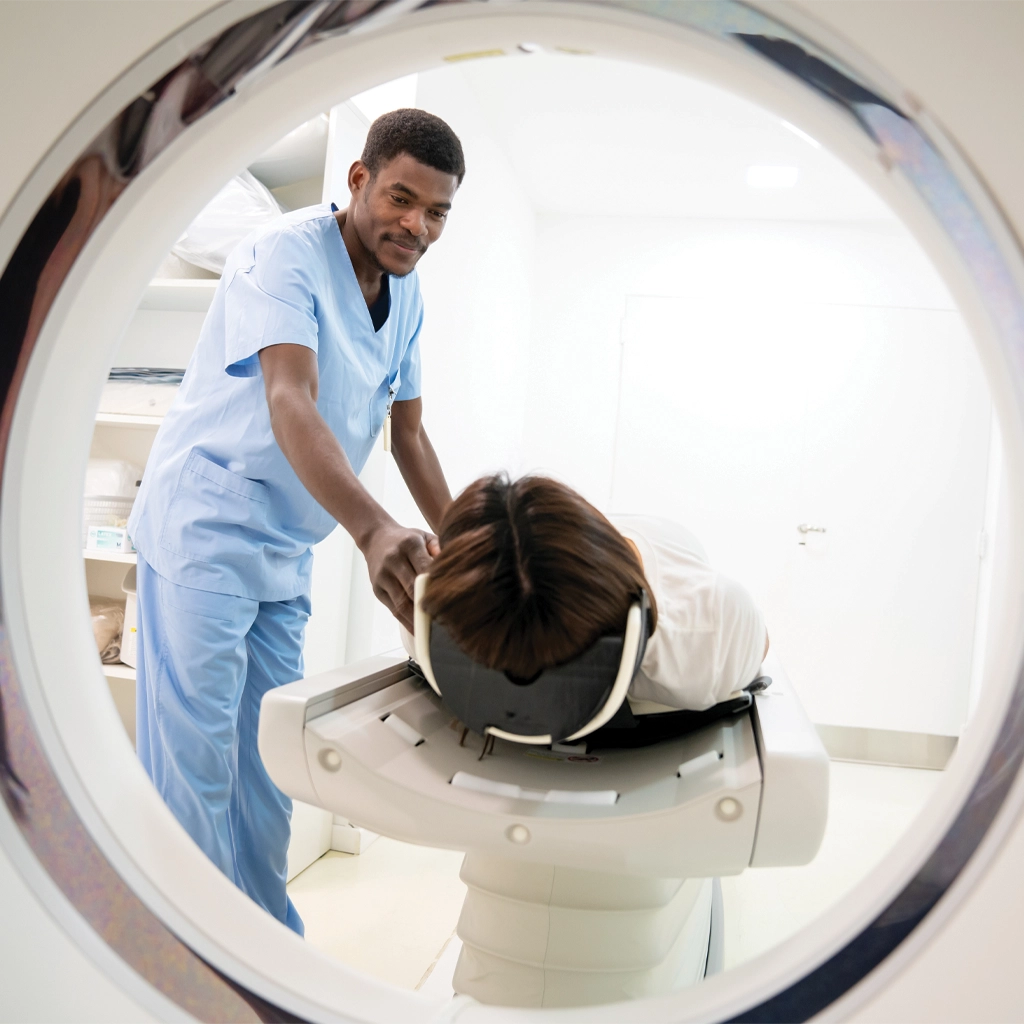
MRI

Preparing for your MRI

Please follow any preparation instructions provided when your exam is scheduled. Unless you are told otherwise, you may generally take your usual medications.
Because the MRI scanner contains a powerful magnet, you will need to remove metal, magnetic, and electronic items before entering the exam room. Whenever possible, leave these items at home:

  • Jewelry, watches, and body piercings
  • Hearing aids
  • Credit cards
  • Hairpins and other metal hair accessories
  • Eyeglasses
  • Removable dental work
  • Pens, keys, pocketknives, and similar items
  • Clothing with metal fasteners, zippers, or accessories

IMPLANTS, DEVICES, AND METAL SAFETY
Tell our scheduling staff and MRI technologist if you have any implanted medical or electronic device or any metal in your body. This includes, but is not limited to:

  • A pacemaker or implanted cardiac defibrillator
  • A cochlear implant
  • An aneurysm clip or vascular coil
  • A nerve stimulator or implanted medication pump
  • An artificial heart valve
  • A vascular access port
  • An artificial joint or limb
  • Metal plates, pins, screws, stents, or surgical clips
  • Bullets, shrapnel, or other metal fragments
  • A history of metal entering or becoming lodged in your eyes

Many implants can be scanned safely under specific conditions, but the exact device must be identified and evaluated before your appointment. Please provide the manufacturer, model, implant card, or other device documentation when available.

Do not enter the MRI scanning area until you have completed the required safety screening and have been cleared by the MRI team. In some cases, additional records or an X-ray may be needed before the exam can be performed.

Please contact North Star Radiology before your appointment if you have questions about an implant, medical device, prior surgery, or possible metal exposure.

Contact North Star Radiology experts today to schedule your MRI scan.